Every stage below exists to produce a damages number that holds up under cross-examination. Each control is here because something went wrong, or nearly did, without it.
The summer changed my mind about what AI adoption means. A good prompt is personal skill. A program needs named owners, source rules, review gates, escalation, and a record of what failed.
A 44-second read of this layer: the seven stages, which controls transfer outside the segment that built them, and the failure records behind each one. It also plays live.
The seven stages
Freeze the source material before anyone changes it.
How it worked
Problem controlled
Work arrives as undifferentiated material: a network pull, a complaint, source PDFs, prior-year templates. Without a declared freeze point there is no answer to the question a reviewer eventually asks, which is what the analysis was actually built on.
Tracker or artifact
A three-folder model. The frozen original pull, never edited, kept as the recovery point. A processed trainer copy. A stripped intern copy with outputs removed so the cohort has to produce them. Each derived folder carries a written receipt naming what was removed.
What AI did
Inventoried and classified the pull, then produced the removal receipts. Only unreferenced specification scripts, logs, and editor artifacts were dropped. No analytical file was touched.
Human authority
The program lead decided what counted as source of truth. Keeping the pull frozen was a team rule, backed by the receipts rather than by any technical lock.
Escalation trigger
Any proposed change that would touch an analysis script, a dataset, a workbook, an exported result, or the archive stopped the pass and returned to a person.
Evidence at the gate
A receipt inside each derived folder stating what was removed and why. Specification scripts were dropped because the run-all files never called them, which is a checkable claim rather than a judgment.
What failed
A synthetic scaffold built in parallel produced a different market-concentration path than the real package. For a period it was mistakable for the case. It had value as folder conventions and none as data.
What was kept
Demo data now gets labeled as demo in the folder that holds it, because the label used to live only in the memory of whoever built the file. The three-folder model with receipts is now the default for any case package handed to a cohort.
How it is set up
The original network pull is kept in a folder that never gets edited. If anything breaks downstream, the work can be rebuilt from it.
A trainer copy and a participant copy are derived from the original. The participant copy has the outputs stripped out so the interns produce them.
Each derived folder includes a short receipt listing what was removed and why.
Demo and synthetic data are labeled inside the folder that holds them, so the label is still there after the person who made the file has moved on.
Split the work without losing the question it has to answer.
How it worked
Problem controlled
Six analyses, three authors, different data grains, one report. Parallel work either converges by design or it converges the night before it is due.
Tracker or artifact
Numbered analysis folders, each self-contained, driven by a single parent run-all. Above them sits the evidence ladder: concentration establishes structure; backlog, fleet age, and price indices document patterns; the regression estimates a conditional difference; damages apply the selected rate to the revenue base.
What AI did
Scaffolding and file conventions. Script twins so the same analysis could be read in two languages. An export-filename repair so the approved report numbering refreshed in place. No sample, filter, model, calculation, or variable definition changed.
Human authority
The regression specification belonged to the senior economist who wrote it. Each analyst owned their assigned analyses and signed the report.
Escalation trigger
A new cut, a new comparison, a new analysis. None of these were open to AI at any point, regardless of whether the tools could produce them.
Evidence at the gate
Static verification before any run: every report-facing script target resolved, zero missing target workbooks, zero missing raw-result sheets.
What failed
A good first output is not a reusable workflow. The original run-all carried machine-specific package checks, workbook checks, folder creation, and custom routines. It ran once, on one machine, and did not travel.
What was kept
The run-all was rewritten to the pattern already used elsewhere in the practice: three globals, one loop over data folders, one loop over analysis folders. The plain version is the one another team can pick up and run.
How it is set up
Each analysis lives in its own numbered folder, and one parent script runs all of them in order.
The parent script stays simple: a few globals, one loop over the data folders, one loop over the analysis folders. Anything fancier tends to run on exactly one machine.
The evidence ladder is agreed before coding starts, so each analysis knows what conclusion it is building toward.
Before the first run, every script target is checked: the workbooks exist, the result sheets exist, the paths resolve.
Record decisions once, then keep them closed.
How it worked
Problem controlled
Decisions get made and then silently un-made. A cut analysis reappears. A caption drifts from its figure. Nobody is wrong on purpose; the decision simply was not carried into the next artifact.
Tracker or artifact
A comment ledger recording what was decided and when. A report-day punch list with due and overdue formulas, priority and assignee fields. Tie-out lists for every new number. An append-only state log dated by session.
What AI did
Maintained the ledger and the punch list, and ran the structural audits: every table and figure caption checked against its nearby visual, and caption sequences checked against the list of figures.
Human authority
The program lead owned which decisions were closed. The ledger kept the record.
Escalation trigger
A closed decision reappearing in a later artifact. That is not an editing question, and it does not get resolved by the person who reintroduced it.
Evidence at the gate
Every open item carries an owner and a date. The count of open comments at report day was visible rather than discovered.
What failed
A capstone slide resurrected a market-concentration forecast the ledger had cut two weeks earlier. The ledger was correct and current. Nobody read it before building the deck.
What was kept
A decision ledger controls only what is checked against it. New artifacts now get checked against closed decisions before they go to review.
How it is set up
A decision ledger opens on day one. Every closed decision gets a date and an owner.
New drafts are compared against the ledger before review. That comparison is what catches a closed decision coming back.
The punch list tracks open verification items with due dates, so the gap between drafted and checked stays visible.
Captions are checked against their exhibits, and the caption sequence is checked against the list of figures.
Test the reasoning underneath the draft.
How it worked
Problem controlled
Review that catches typos and misses reasoning produces a clean document that cannot survive a question.
Tracker or artifact
Section-level close reads, structured so each analysis states why it matters and what the result permits the report to conclude. A tight-edits workbook separating direct prose edits from comments requiring evidence or author judgment. Feedback tagged Fix, Good, Tip, Note.
What AI did
Produced the review scaffold and the candidate findings, then sorted them: passages to keep as models, passages to refine, substantive or technical issues, missing sections, and the questions a deposition would ask of each.
Human authority
The reviewer decided. When one pass could have added a framing paragraph about conservatism, it withheld it and recorded three things a human had to confirm first.
Escalation trigger
Any finding requiring evidence or author judgment routed to a named person rather than being resolved inside the pass.
Evidence at the gate
The review distinguishes descriptive patterns from model results everywhere it touches. That distinction is what a cross-examination attacks, so it is what the review is built around.
What failed
Review that only tags problems produces compliance rather than comprehension. Early passes read as a list of gotchas, and the analysts fixed exactly what was named and nothing adjacent.
What was kept
Lead with the specific thing that is working, show before and after, give the why in plain English, and ask the question rather than issuing the correction. The point is that the author understands the change well enough to catch the next one.
How it is set up
Review starts with what each analysis actually supports, and whether the text claims more than that.
Feedback is tagged Fix, Good, Tip, or Note, and opens with something specific that works.
A finding that needs evidence or judgment goes to a named person instead of being settled inside the pass.
Edits are shown before and after, with the reason written out in plain language.
Require evidence before the work advances.
How it worked
Problem controlled
Work moves to the next phase because the calendar said so. The gate exists to make advancement conditional on something other than the date.
Tracker or artifact
Report day with a fixed afternoon handoff. A mock deposition with an examiner runbook and witness preparation cards. A production-check folder that has to run clean.
What AI did
Built the examiner runbook, disaggregated by assigned pairing so each examiner used the questions they developed, and the witness packet, deliberately not disaggregated because every author signed the whole report.
Human authority
Three senior reviewers ran the examinations. The governing rule came from the practice lead: every signer owns the entire report, and staff attribution is not a defense.
Escalation trigger
Named examiner triggers. Attributing an answer to a supervisor. Retreating into technical weeds. Producing a new sensitivity in the chair. Citing something unsupported. Referencing AI-generated data, which stops the session rather than starting a debate.
Evidence at the gate
Both packets passed deep document integrity checks, and every rendered page was visually inspected with no clipping or overflow. The gate applies to the gate's own artifacts.
What failed
For a while, describing a model choice as more conservative was accepted as an answer. Nobody asked conservative relative to what, or for an economic reason independent of the lower number.
What was kept
The question was rebuilt. A witness now defines each comparison, names its data grain and assumptions, explains why the primary specification is primary, and places the corroborating estimate as corroboration rather than as the reason for the choice.
How it is set up
At least one gate is spoken: the author answers questions from someone who did not build the work.
The escalation triggers are written down before the session: crediting an answer to a supervisor, retreating into technical detail, offering a new sensitivity on the spot.
Every author is responsible for the whole report, so witness prep covers the whole report. Only the examiner materials are split by assignment.
The prep packets are rendered and page-checked before the session, the same as any deliverable.
Keeps the exhibit, the report, and the calculation tied together.
How it worked
Problem controlled
The document is not the analysis. Every hand-built exhibit, caption, and slide is an opportunity for the two to separate without anyone noticing.
Tracker or artifact
Figure workbooks with a report-facing tab and a source-image tab, each carrying the privilege stamp, the exact report caption, and the source note. Static reproductions kept structurally distinct from analysis-linked workbooks refreshed by script.
What AI did
Production only. Building the workbook, setting the caption, rendering the exhibit. Never the number in it.
Human authority
The presenter. The operative test is whether they can explain the figure with the deck closed.
Escalation trigger
Any figure that would introduce a number not already in an audited exhibit.
Evidence at the gate
A standing rule: an AI-produced figure is allowed when it plots only audited-exhibit numbers, is tied out across values, labels, units, and base years, carries a source note naming its report table, and its presenter can explain it unaided. Production yes, analysis no.
What failed
Plausible but unsupported, twice. A defendant name arrived garbled as a plausible-looking substitute and had to be corrected against the primary record. A slide presented a share-of-mix difference as a units claim, overstating the real figure by a wide margin.
What was kept
The boundary is not whether AI can make a figure. It is whether the figure introduces a number. Proper nouns and units get re-verified against the primary record every time, because both failures were fluent and neither looked wrong.
How it is set up
AI builds exhibits; it does not introduce numbers. Anything new to the record comes from a person.
Every AI-touched exhibit is tied out against its source: values, labels, units, base years.
Each exhibit carries a source note naming the table it came from.
The presenter has to be able to explain the exhibit with the deck closed.
Save the failure and the fix for the next team.
How it worked
Problem controlled
The program ends and the operating system leaves with whoever was holding it. Next summer starts from the same place, minus the person.
Tracker or artifact
An append-only state log, dated by session, recording what changed, where it lives, why it helps, and when to use it. Review folders organized by person. A mutual exit interview rather than an extractive one.
What AI did
Wrote the state log entries at the end of each working session, in a fixed shape so a reader who was not in the room can reconstruct it.
Human authority
The program lead decided what was durable and what was incidental to this case.
Escalation trigger
A lesson likely to repeat across programs promotes out of the case log into the shared method, so the next program inherits it by default rather than by memory.
Evidence at the gate
The log is dated and append-only, and it was read by people who had not attended the sessions it describes.
What failed
This is the stage the program under-ran, and it matters most to the thesis. One closeout was never submitted. Both submitted closeouts were missing their tool-evaluation results. One reusable-resource field came back as not applicable.
What was kept
Closeout is a phase gate and carries the same evidence requirement as every other gate. Otherwise the program's lessons leave with the people who were there.
How it is set up
A dated, append-only log records what changed, where it lives, and why it helps.
Closeout carries the same evidence requirement as every other gate. It was the weakest part of this program, and it is the first thing the next one should fix.
Lessons likely to repeat go into the shared method, not just the case log, so the next program starts with them.
The exit interviews were mutual: the interns asked their own questions too.
The scaffold
Three buckets that hold every AI-workflow question.
The Build bucket covers the work up to and through development. The Governance bucket covers the checks that run before anything is uploaded or relied on. The Transfer bucket covers what happens once a second person has it. Questions about AI work at an expert firm tend to land in one of the three, and the answers below come from internal notes on documented events in this program and its public-data twin.
01
Build
Up to and through development
Intake, boundary, and the build itself. The recurring question comes first, then who can reject the answer, then the tool.
Vocabulary
Intake: a recurring, material question with a measured baseline (inputs, output, time, reviewer burden, and who can reject the result).
Boundary: approved system, allowed data, source hierarchy, engagement approval, register entry, and the decisions that stay human.
The build itself: method turned into requirements, with sources, calculations, exceptions, and review points visible in the artifact.
The concept
Capability is not permission. The practitioner's standard is set before the tool is chosen.
The question each bucket answers
What is the recurring question, and who can reject the answer?
Questions an AI leader tends to ask, answered from the record
How was the case package prepared so three analysts could work in parallel without contaminating the source?
Three folders. The original network pull stayed frozen. A trainer copy and a stripped intern copy were derived from it, and each derived folder carried a receipt naming exactly what had been removed. Only unreferenced specification .do files, logs, and editor artifacts came out. No analytical file was touched.
What tools ran the analysis, and how was the run kept reproducible?
Stata for the analysis, Excel for report-facing exhibits, Word for the report. Numbered analysis folders under one parent .do file. The parent was rewritten to the practice's existing pattern (three globals, one loop over data folders, one loop over analysis folders) after the original version failed to run on a second machine.
What was fixed before anyone wrote code?
The evidence ladder. Market concentration (an HHI computation) establishes structure. Backlog, fleet age, and monthly Fisher price indices document patterns. A regression with dummy and difference-in-differences specifications estimates a conditional price difference under stated controls, with ambulances as the benchmark market. Damages apply the selected overcharge rate to the revenue base.
Where was the AI boundary drawn in the build?
At production, not capability. AI produced scaffolding, file conventions, script twins so the same analysis could be read in two languages, and an export-filename repair so approved report numbering refreshed in place. It did not choose a sample, a filter, a model, a calculation, or a variable definition.
What is the public-data twin of this build?
The Fisheries workbench: FWC PFDM records for Florida spiny lobster and stone crab, 25 years of coverage (2000 to 2024), 50 annual records, values deflated on a published CPI series to a stated base year, exported to an FTI-formatted workbook with sources, calculations, and exceptions on their own tabs. Four promotion gates (schema, period, duplicates, reconciliation) run before any candidate can replace the approved snapshot. Same shape as Clifford, no confidential data.
02
Governance
Before upload or reliance
Review, controls, and portability. Practitioner objections become requirements. A candidate never overwrites the approved snapshot.
Vocabulary
Review: objections from the practitioner become requirements in the next version, not notes on a slide.
Controls: schema, period, duplicate, and reconciliation checks; human approval; rollback; an evidence packet; an authenticated approver.
Portability: plain files and vendor-neutral logic, so the workflow survives a model, pricing, or platform change.
The concept
The defensible capability is controlled promotion, not an auto-updating dashboard.
The question to ask
What happens when the model, permissions, or data change, and who approves?
What an AI leader would ask, answered from the record
What actually failed, and how was it caught?
Three documented failures. A capstone slide reinstated a market-concentration forecast the comment ledger had cut two weeks earlier; the ledger was current and nobody read it before building the deck. A slide presented an eighteen-percentage-point share-of-mix difference as eighteen percent more units, when the true figure was closer to seventy-five percent. A defendant name arrived garbled as a plausible substitute and had to be corrected against the primary record. All three were fluent, and none looked wrong.
What did the review layer look like in practice?
A comment ledger recording every decision and its date. A report-day punch list with due and overdue formulas, priority and assignee fields. Tie-out lists for every new number. Feedback tagged Fix, Good, Tip, or Note, opening with the specific thing that worked. At the filing deadline the ledger held one hundred twenty comments, twenty-four still open, and that count was visible rather than discovered.
What is the promotion contract on the Fisheries workbench?
New data enters as a candidate, never as a replacement for the approved snapshot (currently dated 10 March 2026). Schema, period, duplicate, and reconciliation checks run before promotion. A failure quarantines the candidate and names every failed gate. A reviewer's CPI catch during testing became a fail-closed contract rather than a one-time correction. The public demonstration deliberately disables promotion; a firm pilot would require an authenticated approver.
What did the model refuse to do, and why does that matter?
Asked to project next year's dockside value and recommend an investment, the workbench answered that this was not supported by the approved sources. It can summarize recorded history and apply disclosed calculations. Refusing the forecast is the control working, and it is the behavior a reviewer can trust more than a confident answer.
Who held authority for what?
The regression specification belonged to the senior economist who wrote it. The program lead decided what counted as source of truth and which decisions were closed. Each analyst owned their assigned analyses and signed the report. The governing rule came from the practice lead: every signer owns the entire report, and staff attribution is not a defense.
03
Transfer
After a second person has it
The second-user test, the independence bar, the evidence report, and lifecycle ownership. A workflow counts as successful when someone other than its builder can run it and explain where it fails.
Vocabulary
Second-user test: a second analyst runs the workflow and explains its limits.
Independence bar: reproduce, defend, adapt, without the builder in the room.
Evidence report: baseline, quality change, time saved, reviewer effort, reuse, failures, and what still needs judgment.
Lifecycle: owner, users, data access, review interval, and retirement.
The concept
A workflow is not successful because its builder can operate it.
The question to ask
Can a second person run this and explain where it fails?
What an AI leader would ask, answered from the record
Did the second-user test actually happen?
Yes, under examination. On July 23 each intern was cross-examined on their own workstream (pricing methodology, data infrastructure, index construction) by senior reviewers who had not built the work. The pooled overcharge estimate, the choice of ambulances as the benchmark market, and the construction of the price indices were each challenged on method and each defended on the record by the person who built it.
What were the escalation triggers in that examination?
Written down in advance. Attributing an answer to a supervisor. Retreating into technical weeds. Complaining about data sufficiency. Producing a new sensitivity in the chair. Citing something unsupported. Referencing AI-generated data, which stopped the session rather than starting a debate.
What is the evidence report for the summer?
Inputs: three analysts with no prior expert-report experience, ten weeks, one constructed case, ~48,000 price observations. Outputs, counted from the filed package: a 10,373-word expert report with 93 footnotes and 28 exhibits (11 tables, 17 figures), filed July 17 on deadline; 4,187 lines of statistical code across 69 scripts; 15 data modules processed and documented; three depositions defended July 23; a 45-minute capstone July 31. Program scaffolding: 5 case-meeting control packets, 10 dated materials drops, 10 supporting memos, 3 trainings, 5 standing trackers. Failures: three, named above. Not measured: reviewer hours. That is the honest gap, and a second run should count it.
What did the exit critique say, and what does it answer?
A senior reviewer's exit observation was that the program lead's tools depended on the program lead. That is the transfer question exactly. Clifford's answer is partial: the interns defended their own methods without her in the room, but the operating system around them (ledger, punch list, state log) was hers to hold. The reproduction blueprint on this page exists because of that critique.
Where did the program under-run, honestly?
Closeout. One wrapped closeout was never submitted. Both submitted closeouts were missing their tool-evaluation results. One reusable-resource field came back as not applicable. The learning loop is the stage that carries a program's knowledge forward, and it was treated as paperwork. It is the first thing the next program should fix.
Source discipline: figures and names here come from the program's own record, the case-study slides shown above, and the Fisheries workbench. Where the record does not support a number, the answer says so.
Demo replay
The promotion gate, step by step.
Eight frames from the Fisheries workbench, the public-data twin of this program. New data never replaces the approved snapshot until every gate passes and a person promotes it. The replay advances on its own; the dots step through it.
PROMOTION GATE · FWC PFDM
The promotion gate
A candidate file arrives. The approved snapshot does not move.
How the Fisheries workbench decides whether new data may replace old.
Gate 1 · Schema
12 of 12 columns match
Names, types, and order checked against the approved layout.
Gate 2 · Period
2000–2024 present, no gaps
Every expected year accounted for. An unexpected year fails here.
Gate 3 · Duplicates
0 duplicate keys
Species, year, and county keys are unique. Repeats fail here.
Gate 4 · Reconciliation
Totals tie to source
Landings and value totals match the published FWC figures.
The CPI catch
One deflator was on the wrong base year
A reviewer caught it in testing. It fails the candidate now, every time.
Quarantine
Candidate held. Every failed gate named.
Nothing overwrites the approved snapshot. The approver reads the list.
Promotion
Approved snapshot · 10 Mar 2026
A person promotes. Rollback stays one step away.
The record
Where the controls were tested.
These are the moments that made the system real. Three are failures. Several controls above were added after one of these happened.
Juncontrol
The case package is frozen
The original pull is set aside untouched, and the trainer and participant copies are derived from it with receipts.
Jul 10control
A forecast is cut
The comment ledger records the decision and the date. The analysis leaves the report.
Jul 16review
The why-and-so-what close read
Every section is asked what it permits the report to conclude. Passages worth keeping as models are separated from passages to refine.
Jul 17gate
The report is filed
A fixed afternoon handoff, an open-comment count that was visible rather than discovered, and a damages tie-out still outstanding at the deadline.
Jul 19gate
A rebuttal arrives
An opposing expert contests method and interpretation within days, which is the first external test of the evidence ladder.
Jul 22gate
Deposition preparation
An examiner runbook split by pairing, and a witness packet deliberately not split, because every author signed the whole report.
Jul 23gate
Three cross-examinations
Each analyst is examined on their own workstream by someone who did not build it.
Jul 24failure
A cut forecast reappears
A capstone slide reinstates the analysis the ledger removed two weeks earlier. The ledger was current. Nobody read it before building the deck.
Jul 24failure
A mix figure is misread
A share-of-mix difference is presented as a units claim, overstating the real figure by a wide margin.
Jul 27decision
The AI figure rule is set
Production yes, analysis no. An AI-produced exhibit is permitted where it plots audited numbers, ties out, carries a source note, and its presenter can explain it unaided.
Jul 31gate
The capstone
Forty-five minutes to the full team, then open questions.
Augfailure
Closeout under-runs
One closeout is never submitted. Two arrive without their tool-evaluation results. One reusable-resource field returns as not applicable.
Try it
Where does the boundary fall?
The rule was simple enough to use under pressure: production yes, analysis no. AI could organize or format audited work. It could not introduce a number, comparison, or claim that was not already in the record. Pick a task.
Select a task above.
A ten-week case program · Summer 2026
Project Clifford
The documentation of a summer internship built around a single idea: give three interns a complete litigation analysis and the coaching to carry it, and see how far they take it.
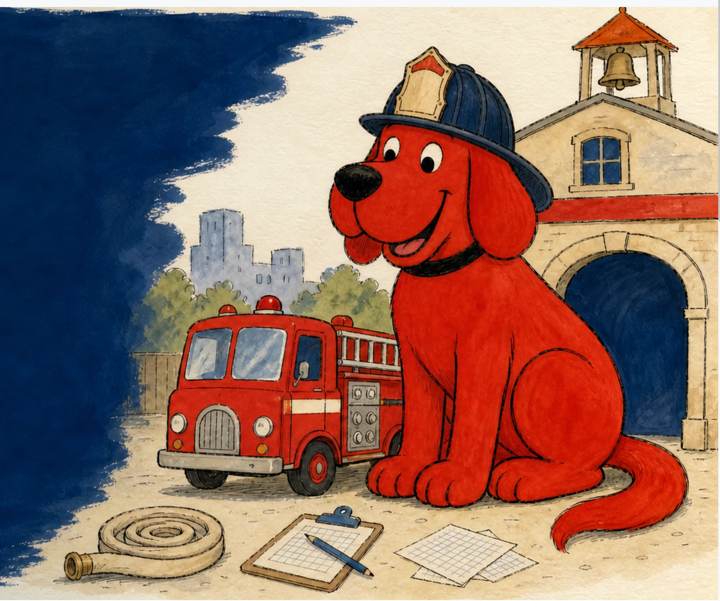
The program's namesake. The case concerned fire apparatus; the interns adopted the dog.Premise
A real case in every respect but one.
The matter at the center of the program, In re: Direct Purchaser Fire Apparatus Antitrust Litigation, was written for teaching. The transaction data, the damages question, the opposing rebuttal expert, and the filing deadline were all constructed to behave exactly like the real thing.
Everything downstream of that construction was held to working standards: production-quality code conventions, expert-report formatting, sourcing discipline on every exhibit, and a schedule that did not adjust for inexperience. The premise was that interns learn the profession fastest when the work is the profession, with coaching in place of guardrails.
IN RE: DIRECT PURCHASER FIRE APPARATUS ANTITRUST LITIGATION
A fictional matter, drafted for teaching: fabricated docket, constructed data, invented parties, real standards.
FICTIONAL
The shape of the work
The arc of an expert engagement.
Economic consulting in litigation follows a recognizable sequence. The program walked the interns through each step of it, in order, in miniature.
Retained
The expert is hired; the damages question is framed.
Expert report
The analysis is built and filed with the court.
Rebuttal
The opposing expert answers the filing.
Reply
The record is defended in writing.
Deposition
The expert is examined under oath.
Trial testimony
If the matter reaches a courtroom.
The presentation
The program’s added step: defend the whole case to the full team.
The final step is not part of a real engagement. It was added so the interns would finish by owning the entire story, not just their pieces of it.
The ten weeks
The route, week by week.
Each phase of the program carried the character of a different apparatus. Hover a week; the truck follows.
Weeks 1–3 · The pumper phase: foundations under pressure
WK 1Arrival
Onboarding, case basics, and the litigation-timeline training: the whole arc, retention to trial, before any data.
WK 2Market structure
Concentration analysis and HHI computation; background tables on the industry and its four apparatus types.
WK 3The data spine
Fifteen data modules processed and documented; fleet-age analysis; the backlog workstream opens.
Weeks 4–6 · The aerial phase: reaching higher
WK 4Price indices
Monthly Fisher indices from ~48,000 observations, by defendant and by apparatus type. The case’s dependent variable.
WK 5Exhibits and datasets
Six consolidated exhibit sets; both regression datasets built at matched grain with ambulance controls appended.
WK 6The regression
The overcharge model: dummy and difference-in-differences specifications. Report drafting begins in parallel.
Weeks 7–8 · The tanker phase: carrying it under fire
WK 7FilingFiled Jul 17
Assembly, sourcing, and the consistency pass: 10,373 words, 93 footnotes, 28 exhibits, out the door on deadline.
WK 8The depositionJul 23
The rebuttal report lands within days. Witness preparation, then a mock cross-examination for each intern.
Weeks 9–10 · The rescue phase: bringing it home
WK 9The presentationJul 31
The capstone: forty-five minutes to the full team, then open questions. Flowers appeared.
WK 10The handoff
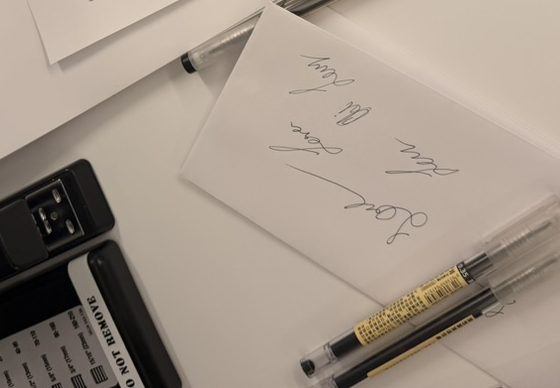
Production cleanup to the bus-test standard, reflections and exit conversations, and the farewell cards that quoted the program back to itself.
The work itself
Selected pages, as presented.
Three slides from the interns’ final presentation, shown with firm markings removed. The analysis, the exhibits, and the language are theirs.
All data shown is fictional, constructed for the teaching case; the pages here have been further altered and anonymized for public display.
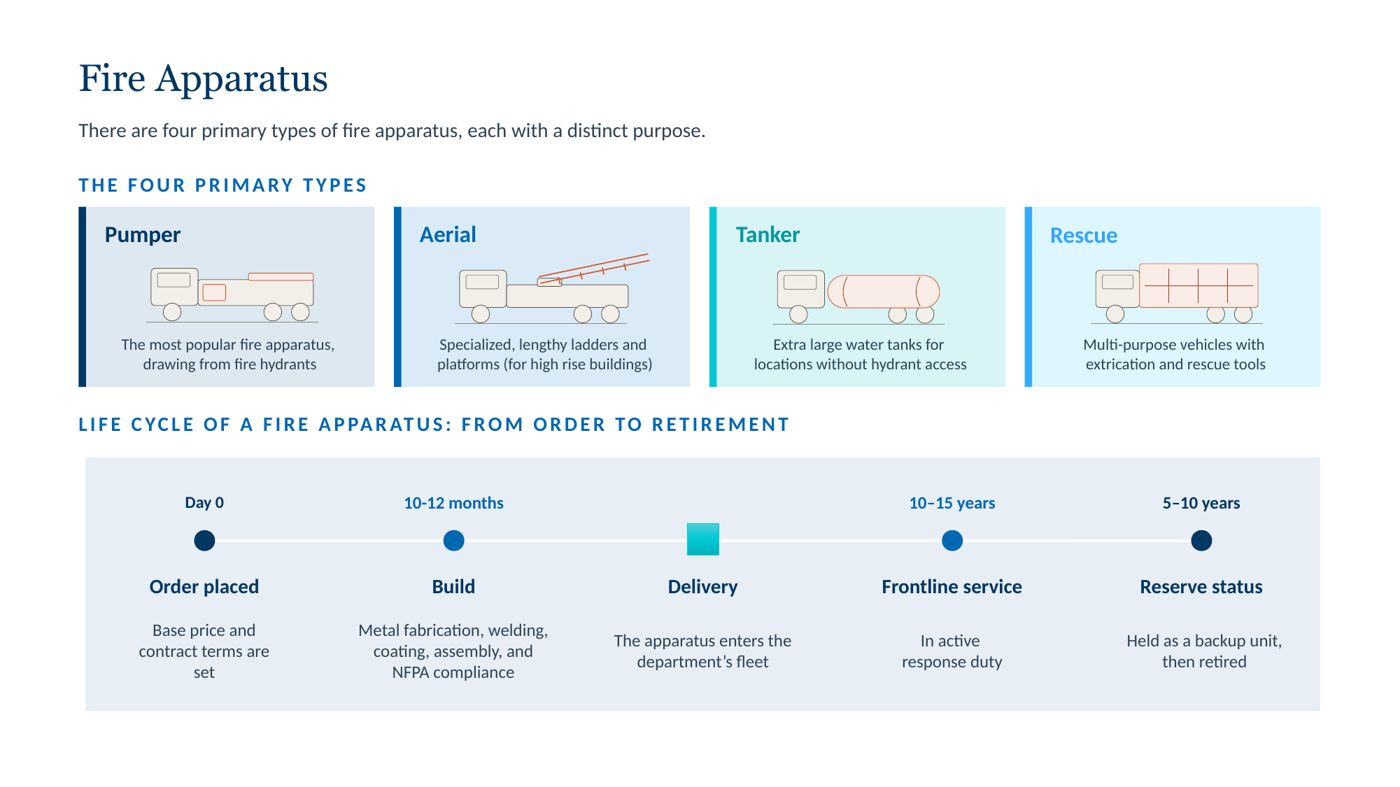
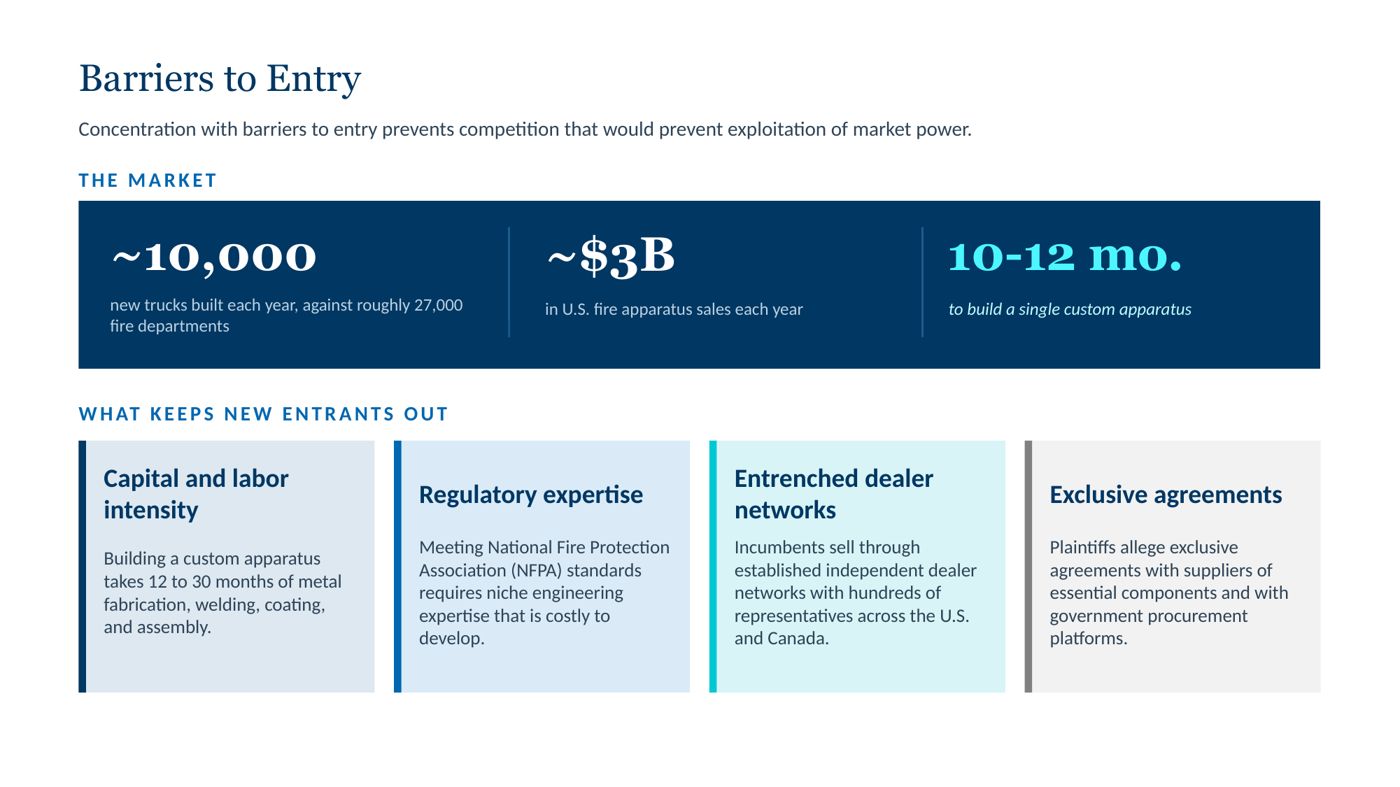
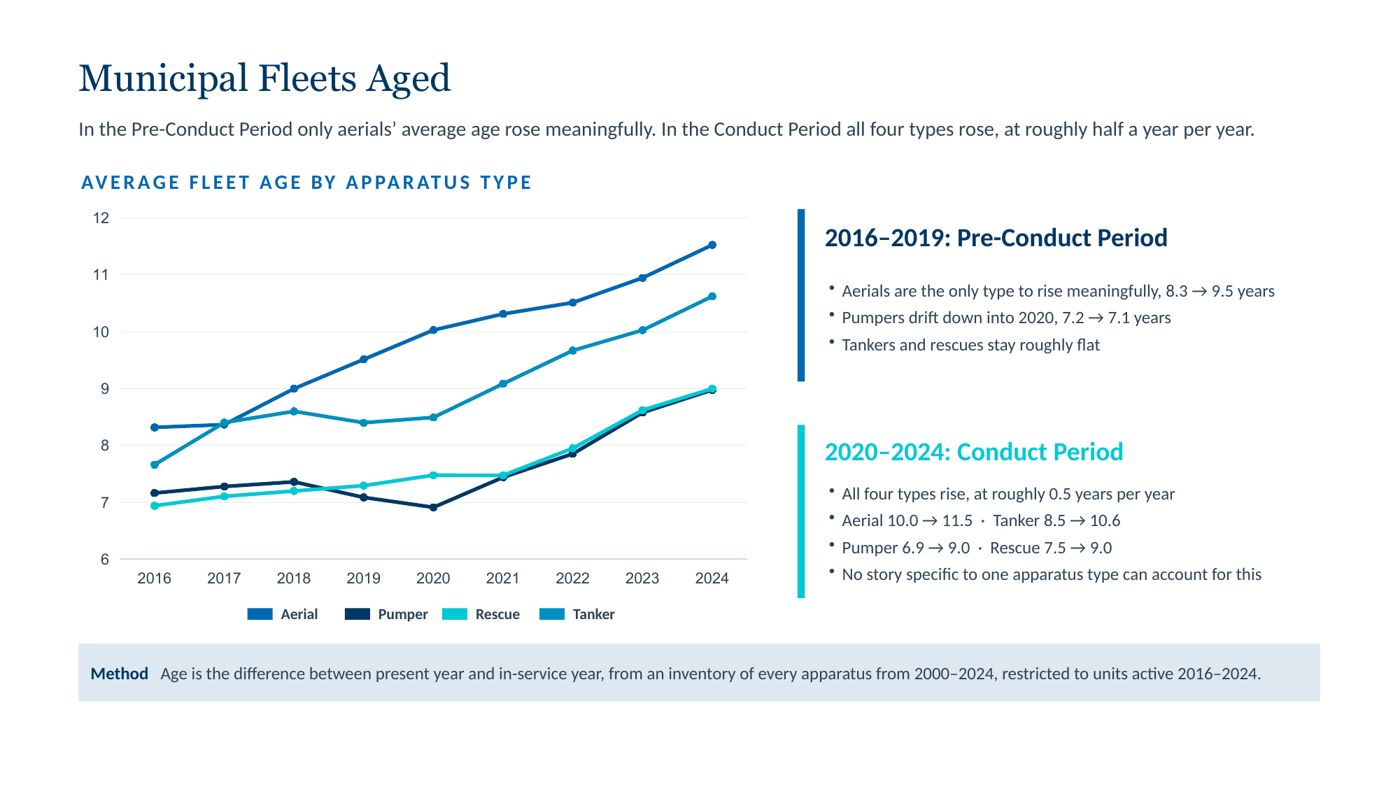
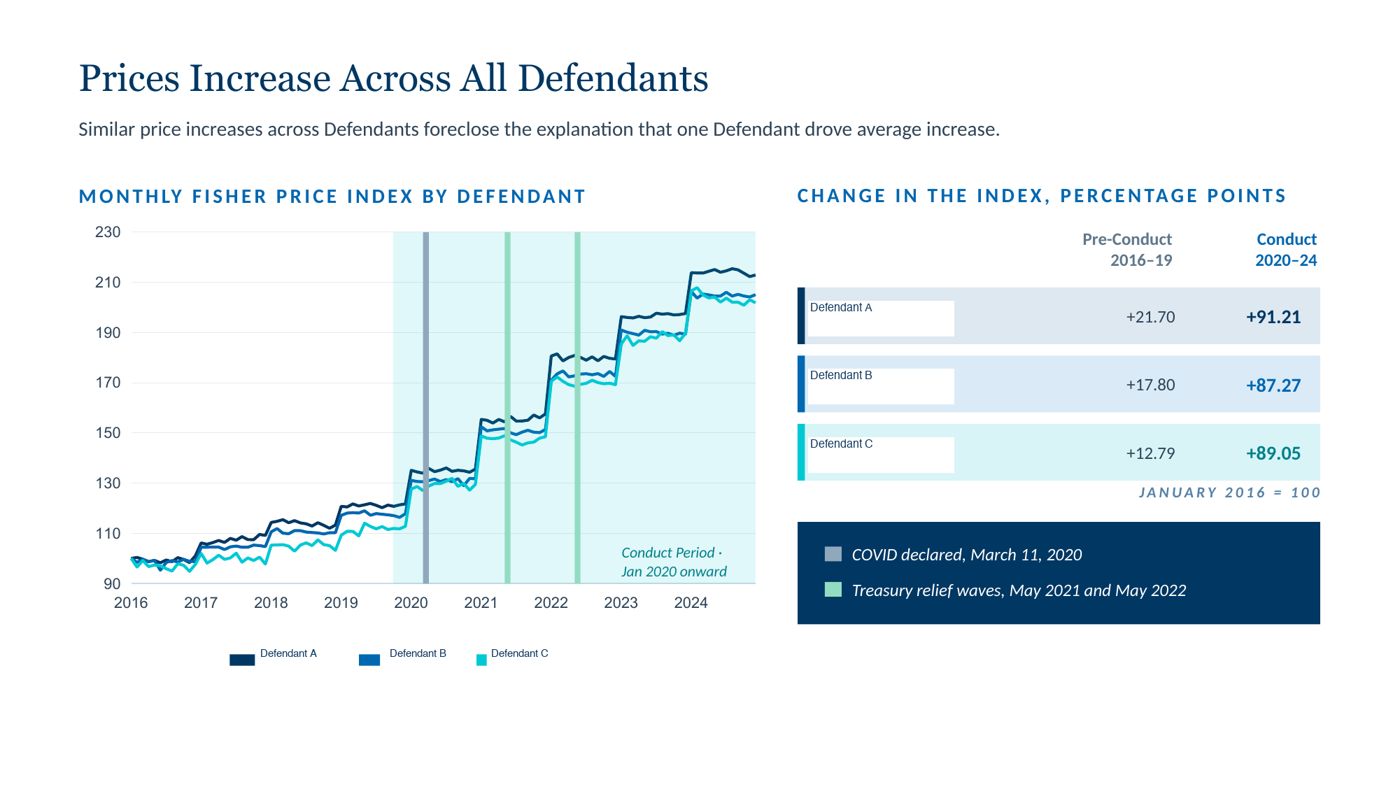
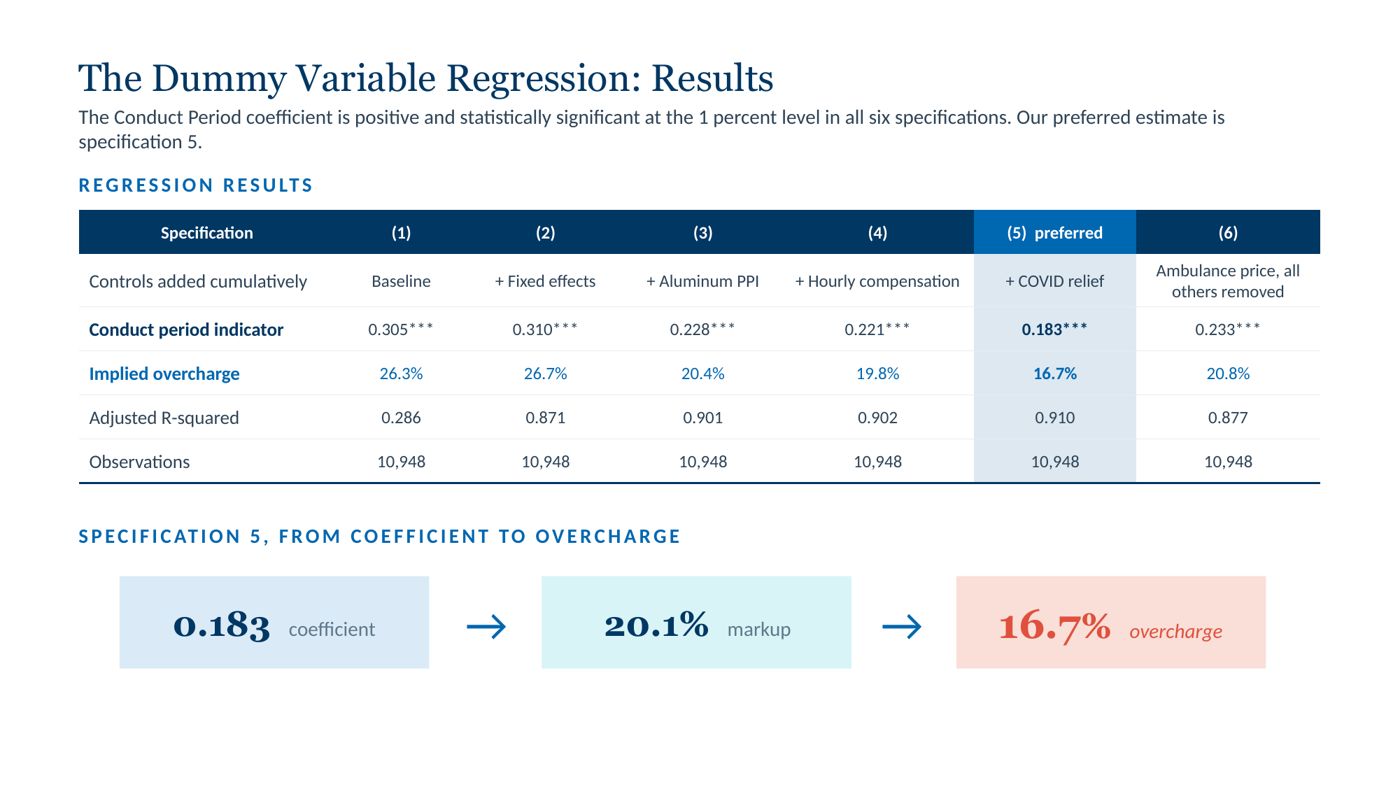
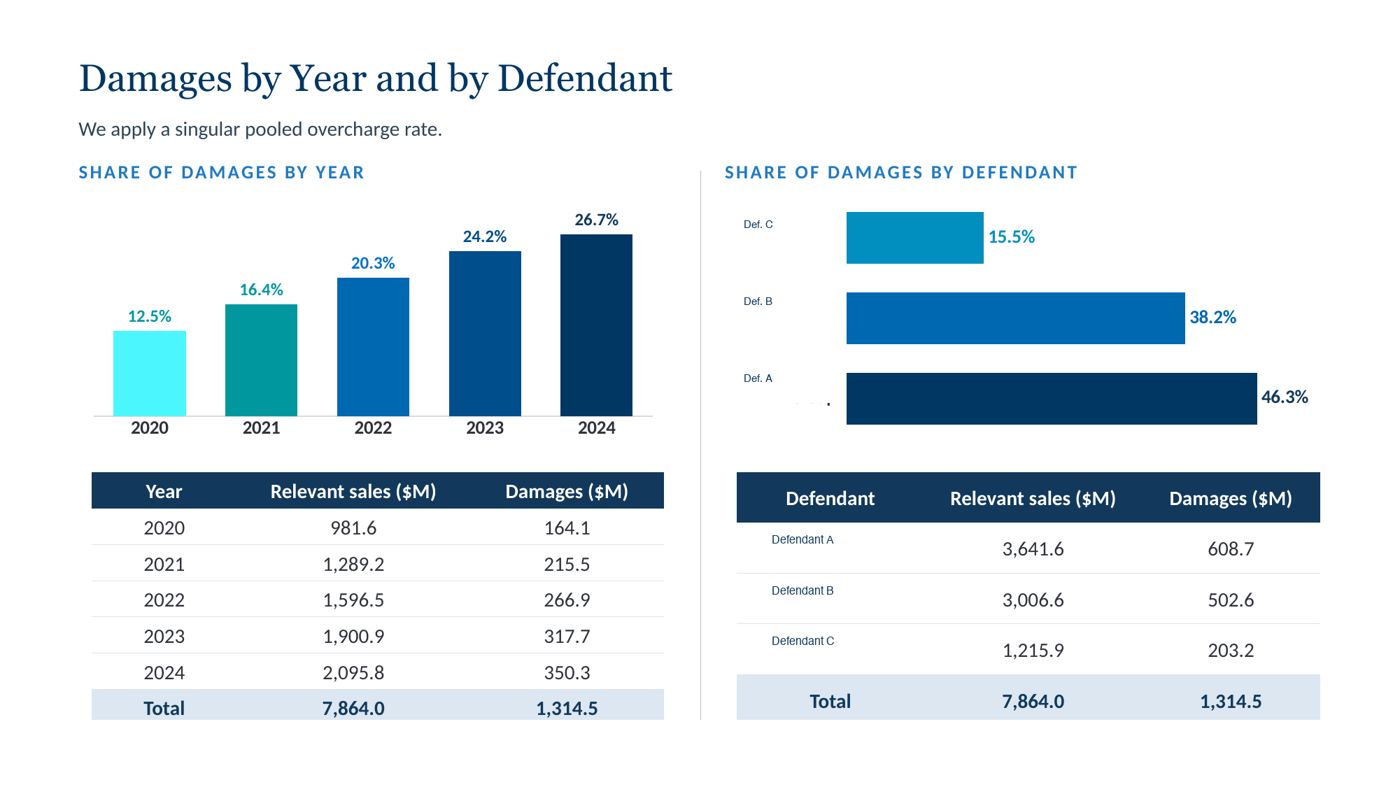
The industry, from the top. Four apparatus types and the life of a truck, from order to retirement.Market structure. A $3B market and the barriers that keep entrants out.Fleet age. In the alleged conduct period, every apparatus type aged at roughly half a year per year.The price story. A monthly Fisher price index by defendant, with the alleged conduct period shaded and external shocks flagged.The regression. Six specifications, a preferred estimate, and the path from coefficient to overcharge.The answer. Damages allocated by year and by defendant under a single pooled overcharge rate.
1 / 6
JUL 17
The report is filed
10,373 words, 93 footnotes, 28 exhibits. On deadline.
JUL 19
A rebuttal answers
An opposing expert’s report arrives within forty-eight hours, contesting method and interpretation.
THAT WEEK
Witness preparation
Prep guide, rehearsal, and the discipline of answering only the question asked.
JUL 23
Three cross-examinations
Each intern deposed on their own workstream.
Pricing methodologyData infrastructureIndex construction
AFTER
What was defended, specifically
The pooled overcharge estimate, the choice of ambulances as the benchmark market, and the construction of the price indices: each was challenged on method, and each was defended on the record by the intern who built it.
July 17, minutes before filing. The declaration page needed three signatures, so three signatures were rehearsed on scratch paper first. Court practice has details you only learn by doing them.Filing night, July 17, 9:19pm. The report was submitted on its deadline, in the evening. The occasion was briefly marked. Eight seconds, recorded.
WRAPPED · INTERNAL, CODE-GATED
Summer 2026 · Wrapped
Your summer, slide by slide.
The receipts
925
lines of statistical code, yours alone
Your constellations
skills drawn as stars, evidence on tap
Where the work concentrated
assignment-coded, not estimated
The handoff
Production cleanup, to court standards.
folders mirrored to team precedent from prior filed cases
The closeout, delivered as software. Each intern received an interactive “wrapped” of their own summer: their counted numbers, their skills as constellations, and their closeout recorded at the end. It lives behind a code on an internal site; this is a replay in miniature.
The production package, as delivered
Production/
├─ 00 Run all.doone command rebuilds every exhibit from raw data
├─ 1. Data/15 modules, D-01 through D-15, each with its own script chain
├─ 2. Analysis/5 analyses, A-01 through A-06 · 2,226 lines of Stata
└─ 3. Tables and Figures/
├─ 01 Tables/Table 1 – Table 11, numbered as filed
└─ 02 Figures/Figure 1 – Figure 17, numbered as filed
Footnote disciplineAll 93 footnotes tracked against source documents before filing; each one traceable to a data module or exhibit.
Captions and cross-referencesA standing guide governed exhibit titles and in-text references, so no figure was cited two different ways.
The copyedit passA final sweep for conventions: number formats, dash styles, capitalization, and caption consistency across all 28 exhibits.
Team precedentFolder structure mirrored from the practice’s last major filed case, so anyone who knew that case could navigate this one.
Exhibit · monthly price index, redrawn from the filed report
Nominal price indices, January 2016 = 100, built by the interns from roughly 48,000 transaction-level observations. Redrawn here exactly from the series behind Figure 7 of the filed report. The case data is entirely fictional, and the rendering here is additionally simplified for visualization.
Output
What ten weeks produced.
10,373
words in the filed expert report
93
footnotes, verified in the consistency pass
28
exhibits: eleven tables, seventeen figures
4,187
lines of statistical code across 69 scripts in the production package
~48,000
observations behind the monthly price indices
45
minutes of final presentation, before open questions
Figures are counted from the filed production package and report document, not estimated.
Beneath the case: the program’s own scaffolding
5 case-meeting control packets, one per formal case meeting, alongside twice-weekly syncs
10 dated materials drops, mirroring how work products move on a live matter
10 supporting memos behind the report, from data documentation to citation conventions
3 best-practices trainings built for the cohort: statistical coding, professional communications, and report production
5 standing trackers: a master case tracker, a skills rubric with per-skill evidence, a staffing board, a coaching cadence, and a closeout checklist
AI-assisted templates behind the trackers and review packets, so the humans could spend their time on judgment
The training underneath
What made the case possible.
The case sat on top of a training program, built and taught over the same ten weeks. Each piece existed so the case work never had to be guessed at.
Statistical computing bootcamp
Graded problem sets in Stata before any case data: do-file discipline, logs, merges, and the habit of writing code someone else will read.
Graded problem sets, basic through intermediate, returned with line-level comments
Do-file conventions: headers, sections, logs opened and closed around every run
Merges with diagnostics checked, duplicates surfaced before any aggregation
What it entailed
Coding best practices
A dedicated training on the house standard: headers, sections, assertion checks, loops over copy-paste, and review-ready structure.
A dedicated training deck on the house standard, taught before case code began
Locals and globals set once; loops in place of copy-paste blocks
Assertion checks that make a script fail loudly instead of lying quietly
What it entailed
Professional communications
How to give an unsolicited status update, ask a question with a proposed answer attached, and flag a blocker before the deadline finds it.
The unsolicited status update, and why seniors trust people who send them
Questions asked with a proposed answer attached
Choosing the channel: chat, email, or a call, and flagging blockers before deadlines find them
What it entailed
Report production and formatting
Exhibit conventions, captions and cross-references, and how a filing actually gets assembled, checked, and packaged.
Exhibit conventions: titles, captions, and cross-references that survive an edit cycle
The production package structure: data, code, tables and figures, report, archive
The consistency pass: one voice across every footnote and figure before filing
What it entailed
Excel exhibit standards
One gold-standard workbook to imitate: fills, borders, number formats, and source notes that survive a reviewer.
One gold-standard workbook studied and imitated, not a rulebook memorized
Fills, borders, number formats, and alignment that read as finished work
Source notes under every table; the raw-to-final figure pipeline
What it entailed
Legal foundations
The law the case lives in: what an antitrust claim alleges, and where the expert’s lane begins and ends.
The anatomy of a price-fixing claim and who direct purchasers are
Expert opinion versus legal argument, and why the report must stay on its side of the line
Confidentiality and privilege discipline: what gets written down, and how
What it entailed
The litigation timeline
A separate track on the legal arc itself, retention through trial, so every case step had its context before it arrived.
The full arc: retention, analysis, report, rebuttal, deposition, trial testimony
Who acts at each step, and what the expert owes the record by when
Taught separately from the case so each phase arrived with its context already in place
What it entailed
Deposition preparation
A witness-prep guide and rehearsal ahead of the mock cross: how to answer only the question asked, and hold an analysis under pressure.
The witness-prep guide: answer the question asked, then stop
Defending scope: what your analysis shows, what it does not, and saying both plainly
A rehearsal cross before the real mock, so the first hard question was not the first ever
What it entailed
What changed
Ten weeks, measured in people.
First statistical problem sets; unsure when to trust her own judgment.
Held the pen on the filed report, and kept asking about one damages step until the team found the calculation it was missing.
Assigned pieces of other people’s analyses.
Built the damages regression end to end, both datasets and every script, and was reviewing and delegating others’ work.
Started two weeks behind the cohort, mid-move between continents.
Owned the largest analysis module in the production package, and fielded the hardest methodological question of the final Q&A, correctly, unprompted.
In their words
From the closeout reflections.
This taught me the value in my stubbornness and desire to understand how everything works, as it caused us to avoid a mistake. This moment gave me confidence to trust myself.
On catching a missing step in the damages calculation
Ask for clarification even when you think the question is silly. Your manager probably won’t think it’s as problematic as you think, and in the long run you save time and effort.
Advice to a future first-year analyst
Take on tasks that you’re less confident about, because you’re never going to improve your skills otherwise.
Advice from another
Reception
What the room said.
Messages received in the hours after the capstone presentation, and one verdict from the other side of the case.
Capstone presentation, July 31. Each intern presented their own workstream and took questions without notes.Following the question period: flowers, presented at the close of the program’s final session.
“Their report is good. I did my job. Now they can do theirs.”
Jul 20 · the author of the opposing rebuttal report — the first review in
“Great job, Jenn! Everyone did so good.”
Jul 23 · the rebuttal’s author again, after the mock depositions
“I am very impressed with these interns!”
“Me, too! They were great.”
Jul 31, 1:21–1:22pm · a senior leader, and a reply
“Great presentation, they didn’t seem nervous at all.”
Jul 31 · a colleague watching live
“I was very impressed with their presentation skills! They did better than a lot of [consultants and senior consultants] would.”
Jul 31 · a cross-practice director
Method
Warmth and competence, together.
The program's coaching model borrowed from a consistent finding in leadership research: people respond most fully to leaders who pair high standards with genuine care.1 In practice this meant demanding, specific feedback delivered by someone plainly invested in each intern as a person, a model teachers of underestimated students named long before management research did,2 and a deliberate transfer of ownership week by week, until the interns ran their own review cycles and defended their own methodology.3
The final test of the transfer was a practical one, borrowed from production work: someone who has never seen the case should be able to find the report, the final exhibits, and the code behind them in under two minutes. The package passes.
It’s so rare for a manager to want to not just know, but truly understand their interns. I felt like you really saw me for who I am.
From an intern’s farewell card
Us interns have lived through your warm demands, and we’ve achieved so much more than we otherwise could.
From another
I hope to one day pay forward the effort you put into our development to a mentee of my own.
From an intern’s farewell card — the method, inherited
Notes
On warmth and competence as the two persistent dimensions of social judgment: Fiske, S.T., Cuddy, A.J.C., and Glick, P., “Universal dimensions of social cognition: warmth and competence,” Trends in Cognitive Sciences 11, no. 2 (2007); and Cuddy, A.J.C., Kohut, M., and Neffinger, J., “Connect, Then Lead,” Harvard Business Review, July–August 2013.
The “warm demander” construct originates in Kleinfeld, J., “Effective teachers of Eskimo and Indian students,” School Review 83, no. 2 (1975), and was developed further in Delpit, L., “Multiplication Is for White People”: Raising Expectations for Other People’s Children (2012).
On scaffolding and the deliberate fading of support as mastery grows: Wood, D., Bruner, J.S., and Ross, G., “The role of tutoring in problem solving,” Journal of Child Psychology and Psychiatry 17 (1976); Collins, A., Brown, J.S., and Newman, S.E., “Cognitive apprenticeship,” in Knowing, Learning, and Instruction (1989).
A closing note
“As a final mission, I poured my heart and soul into the most magical alignment of extraordinary humans, capacity, curiosity, brilliance, teamwork. A summer of growth so spectacular and ‘unparalleled’ for my interns and myself, it’s simply ineffable. My summer of being in conversation with the universe. You get out what you put into life.”